Okefenokee Pale Malted Barley
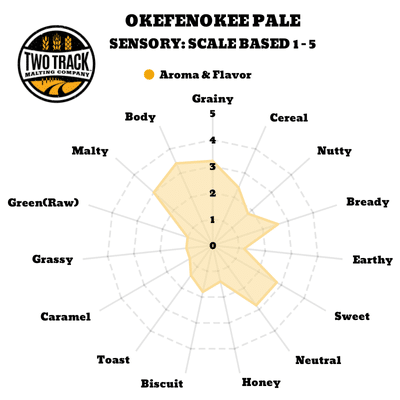
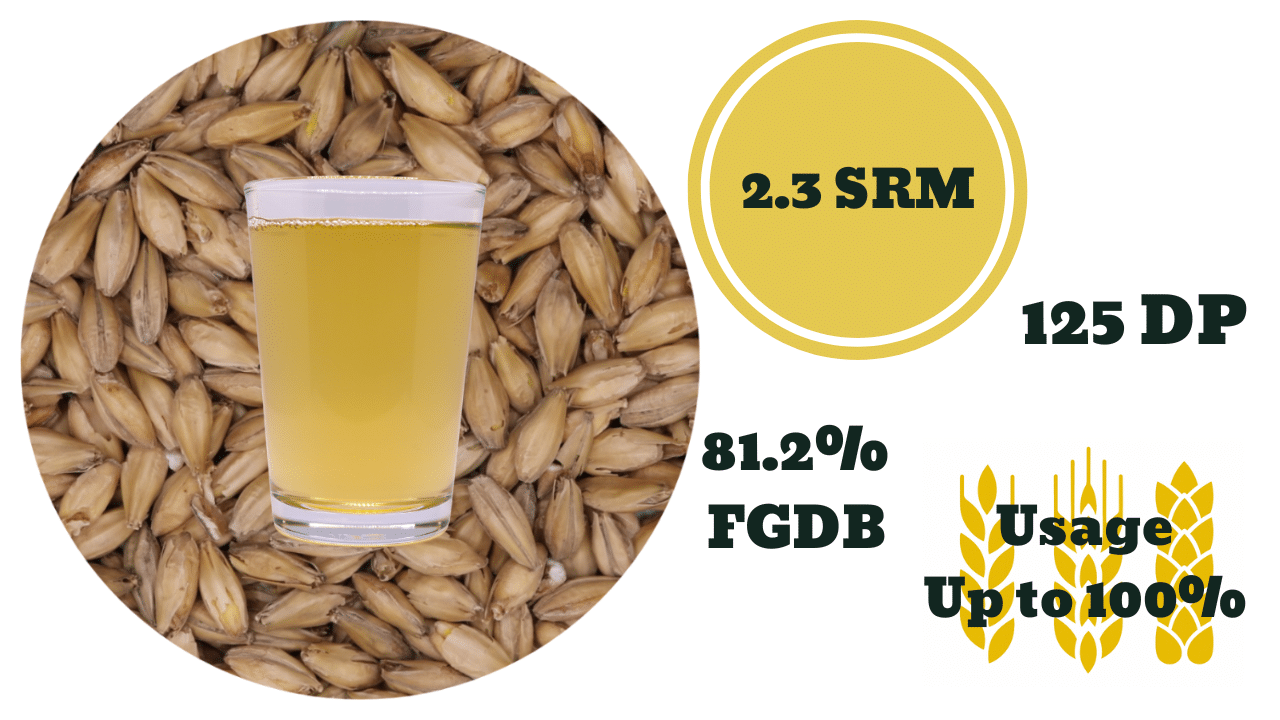
Okefenokee Base Malt is a versatile base malt with a light color range of 1.8–2.7° SRM, making it suitable for a wide variety of brewing recipes. Its flavor profile offers gentle sweetness, complemented by subtle biscuit notes and a hint of nuttiness, providing a clean malt backbone for balanced beers.
Crafted from Brewski 2-row barley, grown exclusively at Arrow K Farms and Stober Farms through a collaboration with NDSU, Okefenokee delivers plump kernels, higher efficiencies, and faster lautering. Its consistent quality ensures excellent performance across brewing styles, enhancing the character of Pale Ales, Blonde Ales, IPAs, Lagers, Amber Ales, and Brown Ales.
Sensory Highlights:
Aroma: Sweet malt with light biscuit and nutty undertones
Flavor: Gentle sweetness with subtle biscuit and nutty notes
Brewing Purpose: Provides a clean malt backbone, enhances body, improves lautering efficiency, and complements a wide range of beer styles.
Comparison: Brewers 2-row, Two Row, Base Malt, Pale Malt, European Base Malt
Fun Fact: Okefenokee was named by our founder’s grandfather, Paul Stober, for a pond that never dried up. Barley grown on this field was used in the very first batch of malt produced by Two Track Malting.
| Plumps on 6/64 | Moisture | Friability | S/T | FAN | Alpha Amylase |
| % | % | % | % | Mg/L | D.U. |
| 96.9 | 4.2 | 94.5 | 32.5 | 159 | 57.4 |
Okefenokee Pale Malt | From The Field
Two Track Malting works with two family farmer’s in North Dakota. Arrow K Farms is located in Belfield ND and grows Brewski, Brewski II, and Astro varieties. Stober Farms in Goodrich, ND grows Brewski and Buzz varieties. Every kernel of grain that Two Track Malting malts is traced back to the field and the farmer who grew it.
When you work with Two Track Malting, you’re sourcing directly from our multi-generational family farms. We practice soil-building, regenerative agriculture—pulling carbon from the atmosphere and returning it to the soil. Our grains are grown without irrigation and benefit from extensive crop rotation. These practices result in a more sustainable, carbon-neutral product that uses less fertilizer and herbicide—better for the environment, and better for your craft.